
EMBER: Obsidian Protocol is an exciting new squad-based, mecha-themed, one-versus-one tactical miniature wargame that is set to release in 2023. Its Kickstarter campaign, launched in 2019, exceeded expectations, reaching a funding value of 279,368 GBP from over 1500 backers, which is about five times the initial target.
One of the standout features of EMBER: Obsidian Protocol is its unparalleled level of customization. Players have the freedom to create their own unique miniature models, complete with battle damage that visually reflects the unit's history on the battlefield. In this game, the age-old adage "What you see is what you get" holds true, as each miniature mecha model is made up of five distinct physical parts: legs, torso, backpack, left hand, and right hand. By combining these parts in different ways and experimenting with various loadouts, players can craft mechas that suit their playstyle and preferences. Want a nimble fighter? Strap on a jetpack and equip it with shotguns. Prefer a tank-like behemoth? Opt for a heavily armored torso and a massive shield. The possibilities are endless, and the only limit is the player’s imagination.
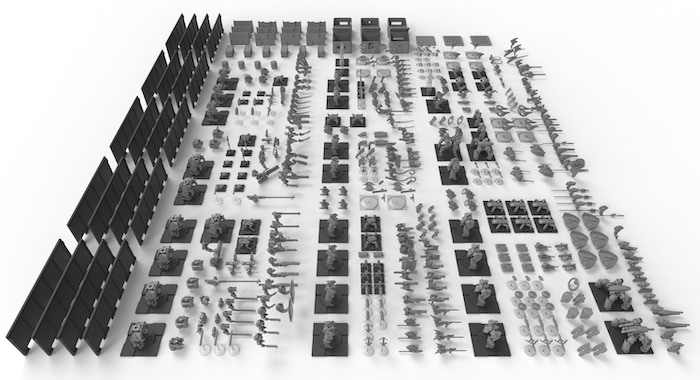 A picture of all model parts in the existing packages, which in total is 18kg
In the currently released game packages, the models are all unpainted gray models, making it convenient for players to paint them themselves. However, the development team has also stated that they have plans to release pre-painted versions, giving players the option to start playing immediately.
EMBER: Obsidian Protocol has a unique advantage with its magnetic parts that are easy to connect and remove, unlike traditional methods such as glue or bolts. This feature allows players to show the damage inflicted on each unit by removing the “damaged parts” from those mechas. Instead of simply placing a damage token, players can physically see a mecha losing its arm or backpack, making the game much more engaging.
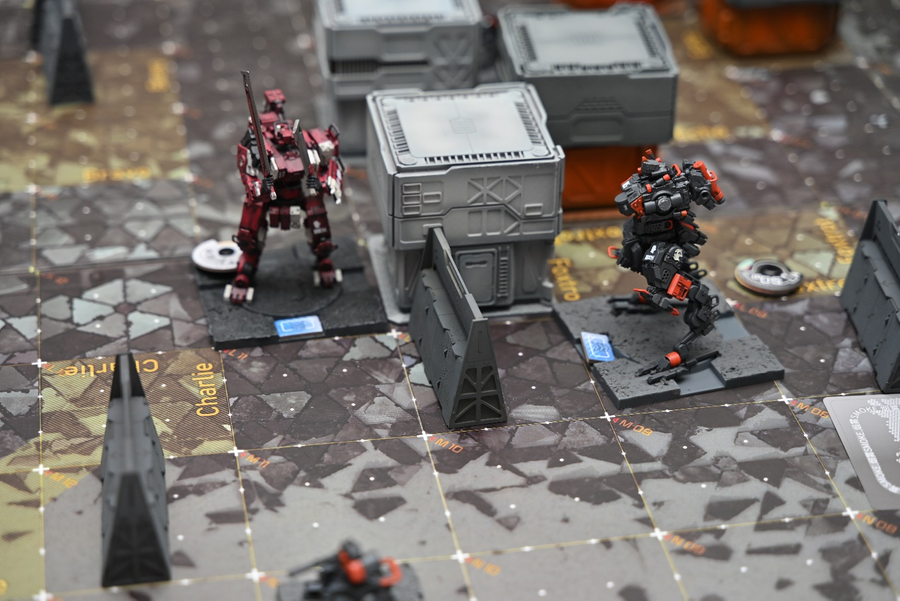 A photo of one game in EMBER: Obsidian Protocol, the mecha on the right is damaged and missing its arms.
When the project was initiated in 2010, Alexander Li, the founder, planned to utilize affordable 3D printing resin for crafting miniature models. However, he soon realized that the resin material did not meet their quality standards. The common resin used in board games is relatively soft and unsuitable for accurately depicting the surfaces of mechas, which have numerous straight lines and angles. Additionally, the material is fragile and prone to breakage, which would inconvenience players. Eventually, the team chose to use hard plastic, commonly used in traditional models of tanks, airplanes, and robots. It gives the models of EMBER: Obsidian Protocol great detail. Nevertheless, this material necessitates costly customized molds, making the production cost significantly higher than resin materials.
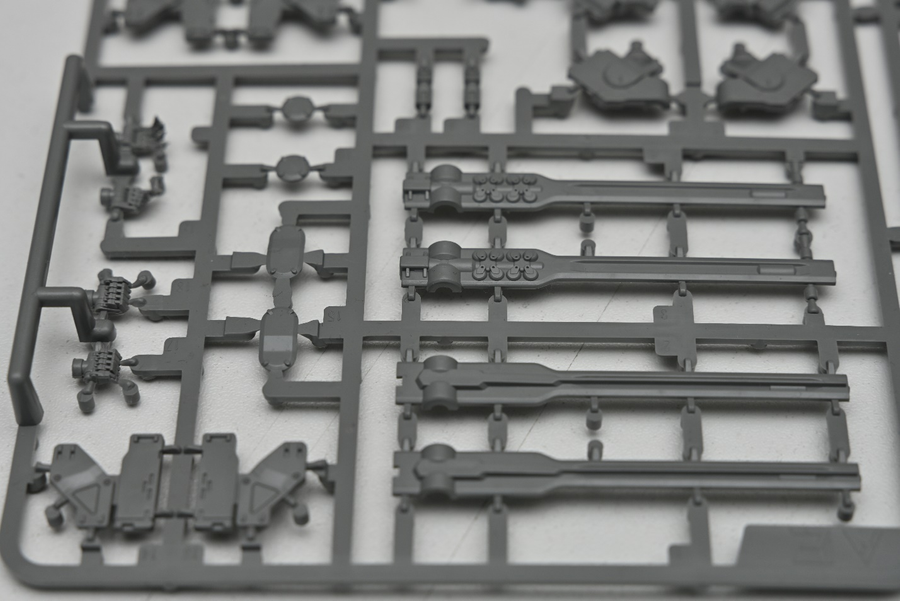 A photo of plastic model kit parts of EMBER: Obsidian Protocol
At first glance, the combat system in EMBER: Obsidian Protocol may appear complex. After conducting a quick playtest, we discovered that it is relatively fast-paced and easy to comprehend. The primary mode of the game is turn-based one on one combat, where players control a squad of mechas.
The combat system in EMBER: Obsidian Protocol is a standout feature, offering a unique and intuitive approach through the use of a "Timing Wheel." Each turn begins with a "Planning Stage," where players must secretly determine the actions of their mecha pilots using the Timing Wheel. Once revealed, the action order is determined, adding an element of unpredictability and forcing players to analyze the strategies of their opponents before making their own plans. Agile actions, such as melee attacks, may act earlier to gain an advantage, while tactical actions will be the last action to counter enemies’ strategies, like shooting down enemy missiles.
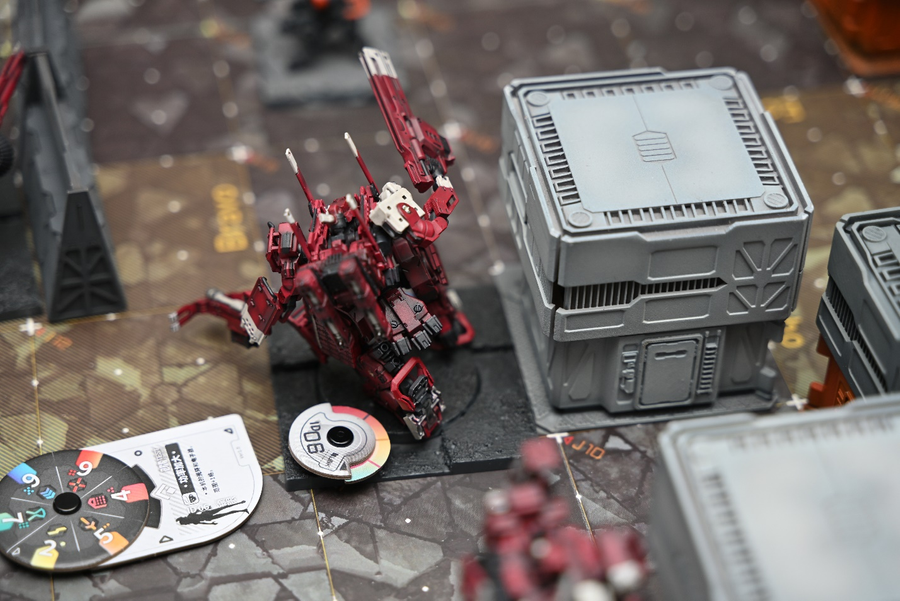 A photo of a finished model in EMBER: Obsidian Protocol, the black wheel on the left is the timing wheel.
In contrast to traditional hit points, EMBER: Obsidian Protocol features a damage system that targets specific parts of the mecha. Successful attacks always result in the destruction of one part or even the entire mecha, making combat intense and full of surprises. Typically, combat concludes within 2-3 turns, due to the game's fast-paced and engaging nature. Additionally, physically removing the damaged parts from the mecha model makes for an immersive and satisfying experience for both sides.
Alexander Li said they have kept updating and improving the rules to improve the game experience in the last decade. Their current core rule book version is v0.9.93 which is close to their final target, v1.0. Most of the rule changes are based on the feedback of the backers and their own tests. “We had reduced one red dice of the punch damage in the latest version. In the previous version, it was a bit too high, and everyone just dropped their gun and started a punch fight.” Said Alexander Li. Another interesting story is that removing damaged parts from the mecha was not mandatory in the initial rules. But players naturally began to remove damaged parts in actual gameplay, and soon it became the standard way to play.
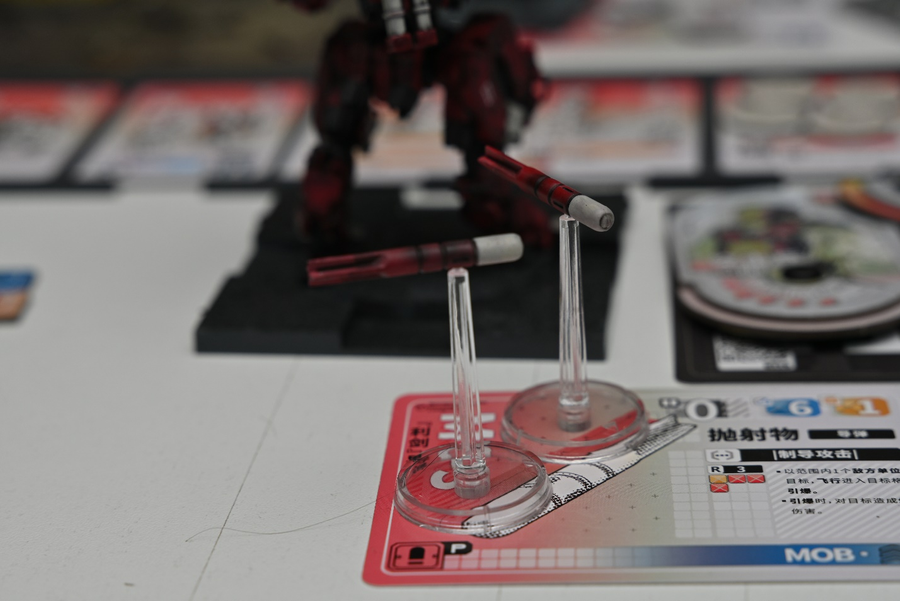 In EMBER: Obsidian Protocol, projectiles like missiles have their own model and can be intercepted by specific attacks.
In conclusion, EMBER: Obsidian Protocol has garnered a lot of attention and support from its successful Kickstarter campaign and is highly anticipated for its release in 2023. The game's unique customization options, fast-paced combat system, and innovative damage mechanics make it a good option for tabletop miniature wargame enthusiasts and mecha fans alike.